Extra points
One more point, where you actually need it.
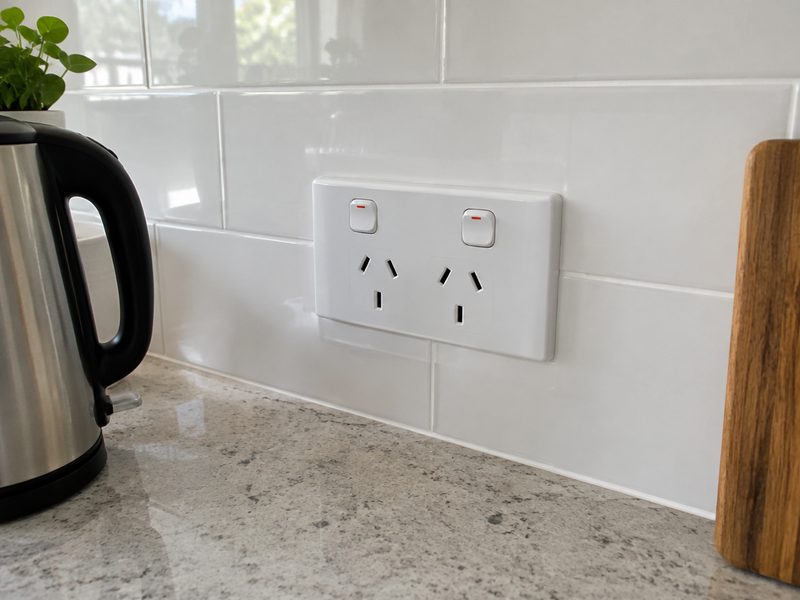
Older Bundaberg homes were wired with one point a room, and the double adaptors and power boards have crept in since. An extra single power point on an existing circuit is the usual job: the point, the cable back to the nearest point and the labour, priced on the phone. The usual spots: beside the bed, on the kitchen bench, in the garage for the fridge, and in the room that has become the home office. Want two or three in one visit? Tell us on the phone and we price them together.
Doubles and USB
Double and USB points.
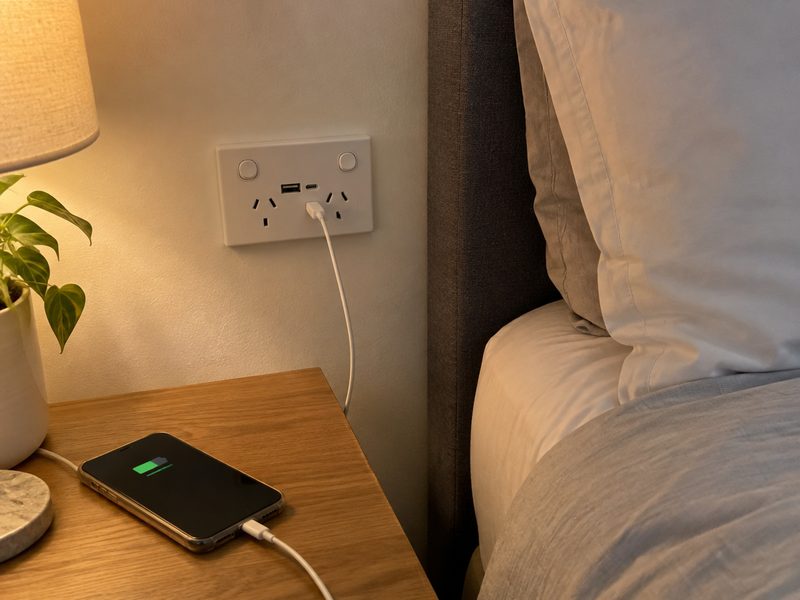
A double point is almost always the better buy, because the next appliance is coming. A USB point has a USB-A and a USB-C socket built into the plate so the phone chargers stop taking up a socket. Both are quoted on the phone; the difference is the price of the fitting, not the labour. We can also change an existing single to a double or a USB point without running new cable, which is one of the quickest jobs we do.
Outdoors
Outdoor weatherproof points.
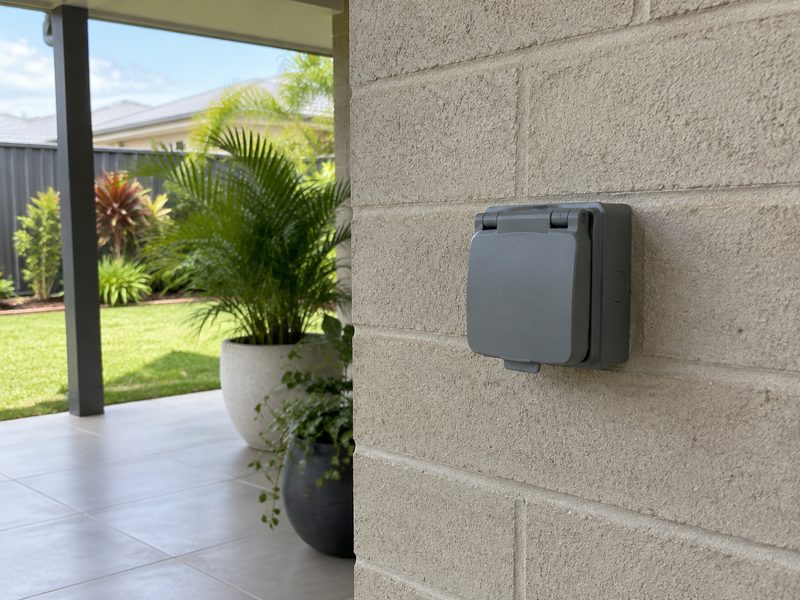
A point on the patio, by the pool pump, in the carport or on the shed wall is fitted in a weatherproof housing with a lid that seals over the plug, so it can take a hose or a Bundaberg storm. Outdoor points must be protected by a safety switch; we check the circuit has one when we quote. The price depends mostly on where the cable can come from: a point on the outside of the kitchen wall is cheap, one at the far end of the yard is not.
TVs and kitchens
Points behind TVs and in kitchens.
A wall-mounted TV wants a point behind it, set so the bracket sits flat and the cables disappear. We fit a recessed point for exactly that, and can add a second plate below for the HDMI and antenna leads to pass through the wall. In a kitchen the rules are stricter: points have to keep a set distance from the sink and the cooktop, and they sit above the bench, not in the splashback tiles if we can help it. Tell us where the appliances live and we put the points there.
Repairs
Cracked, scorched or dead points, and light switches.
A cracked plate is a shock risk, and a point that is brown, warm or smells is a loose connection heating up behind the wall. Do not keep using it. Switch that circuit off at the switchboard if you can and book the swap: a like-for-like replacement is $130 an hour plus parts, price on the phone. The same rate covers a light switch that has gone stiff or stopped working, a two-way switch for the hallway, or a dimmer.
The price
What moves the price.
- Distance from the nearest point. The quickest job is a point fed from one nearby on the same wall or the next room over. A long run across the house adds cable and time.
- Wall type. Plasterboard is quick. Brick, block and fibro take longer, and we may need to run the cable in a surface duct rather than through the wall. If older fibro sheeting might contain asbestos we tell you before anything is cut.
- Ceiling access. With a roof cavity we can get into, the cable goes over the top and nothing shows. A flat roof, a slab above or no manhole means a longer route or a visible duct, and we say so on the phone.
What we don't do
The work we leave to others.
No emergency or after-hours work (we work Mon to Fri, 8:30am to 4:30pm), no switchboard upgrades or rewires, no solar and no air conditioning. A new circuit from the switchboard for a big appliance is quoted if the board has a spare way; if the board itself needs upgrading, we point you to a Bundaberg contractor who does them.