The connection
What a connection covers.
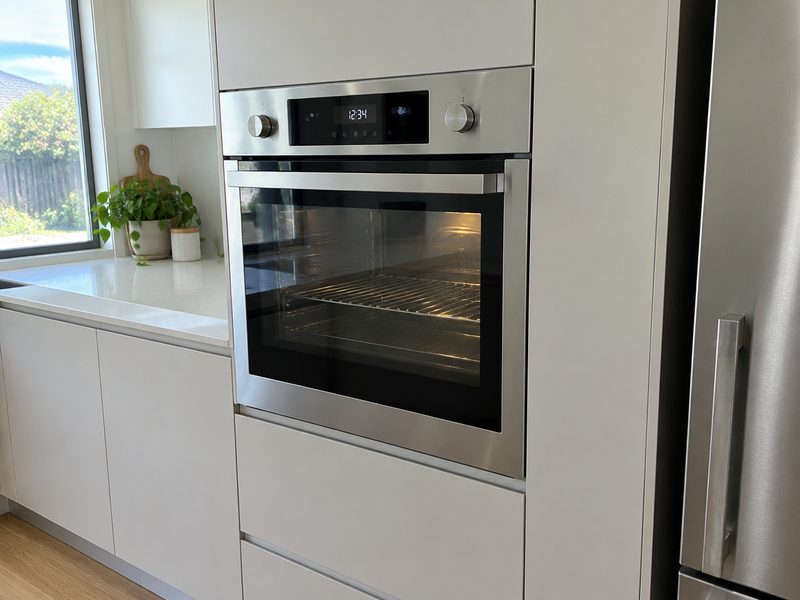
Most 600 mm ovens and all electric cooktops are hard-wired, which means there is no plug: the appliance connects straight to its own circuit at an isolating switch, and by law a licensed electrician has to do it. We isolate the circuit, disconnect the old oven or cooktop, connect the new one to the maker's wiring diagram, check the isolating switch and the circuit breaker are the right size for it, then test the appliance and the circuit and give you a certificate of test. Where the old appliance is still in place, we disconnect it so the fitter or you can lift it out.
Induction
Induction cooktops and the circuit they need.
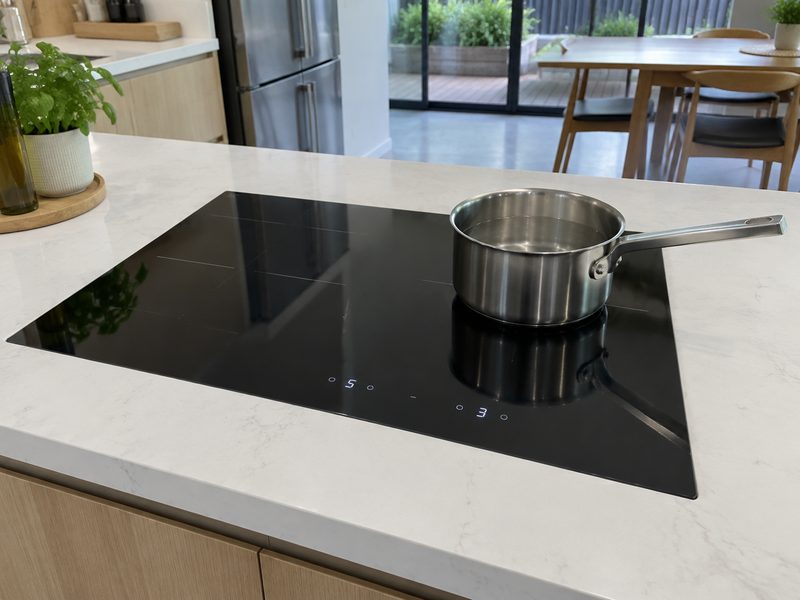
Induction is the one that catches people out. A ceramic or coil cooktop in an older Bundaberg kitchen usually runs on a 20 amp circuit; a 600 mm induction cooktop typically wants 32 amps, and the bigger ones more. If the existing cable and breaker are big enough, it is a straight connection. If they are not, the cooktop needs a new circuit from the switchboard, which we quote on the phone once we know the model and how far the board is from the kitchen. We run the new circuit if the board has a spare way; if the board itself has to be upgraded, that is not work we do, and we tell you before you buy the cooktop. Send us the model number when you book and we check it against the circuit.
Rangehoods
Rangehoods and exhaust fans.
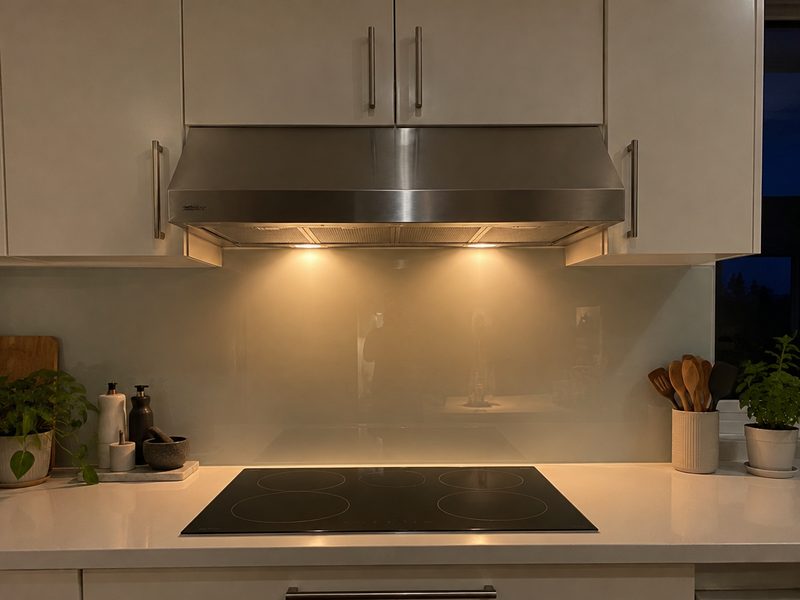
Most rangehoods plug into a power point inside the cupboard above them, so the job is a point in the cupboard if there is not one, or just a check and a tidy if there is. A hard-wired rangehood connects like a cooktop. Either way it is $130 an hour plus parts, and it goes on the same visit as the oven. The same rate covers a bathroom or laundry exhaust fan, replaced like for like or wired to run with the light.
Delivery
Booking around your delivery.
Tell us when the appliance is being delivered and we book around it. We need the oven or cooktop in the kitchen and unboxed, with the installation sheet from the box, and we need to be able to reach the isolating switch and the switchboard. The old appliance can still be in place. If delivery slips, call us and we move the booking.
Who does what
The kitchen fitter, the plumber and us.
- The kitchen fitter or cabinet maker cuts the bench for the cooktop, sits it in, fixes the oven into its cavity and trims the cupboard. In a new kitchen, book us for after the fitter has the cavity and the cut-out done.
- Quickcheck makes the electrical connection, checks the circuit and the isolating switch, tests the appliance and certifies the work. If you are swapping from gas to induction, a plumber caps the gas line; we do not touch gas.
- You can plug in a 10 amp oven yourself if it came with a plug, but most 600 mm and all 900 mm ovens do not.
The certificate
The certificate of test you get.
Every connection comes with a certificate of test, emailed with the invoice. It records the appliance, the circuit, the tests done and our licence number (1513304), and it is what an insurer, a building inspector, a property manager or a warranty claim will ask for. Keep it with the appliance paperwork.
What we don't do
The work we leave to others.
No emergency or after-hours work (we work Mon to Fri, 8:30am to 4:30pm), no switchboard upgrades or rewires, no solar and no air conditioning. A new circuit for an induction cooktop is quoted if the switchboard has a spare way; gas is a plumber's job.